 OIBAI
OIBAIPositive Reinforcement vs Negative Reinforcement: A Para's Guide
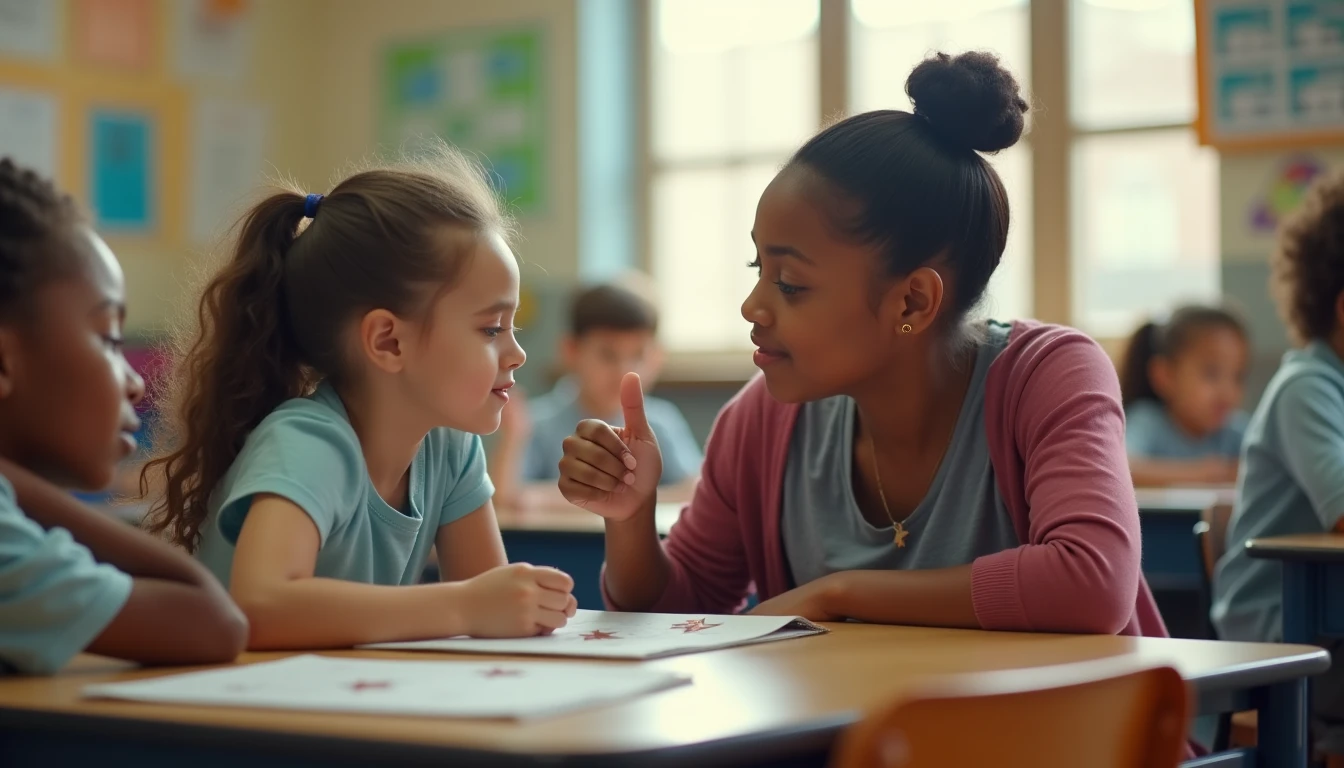
In special education, you hear the word "reinforcement" all day. The teacher uses it. The behavior intervention plan (BIP) is full of it. But positive reinforcement vs negative reinforcement is one of the most mixed-up topics in schools. Many adults think "negative" means "punishment." It does not. This guide explains both terms in plain language. It shows you what each one looks like in a real classroom. It also gives you words you can use tomorrow.
What Reinforcement Means
Applied behavior analysis (ABA) and PBIS use the same definition. Reinforcement is anything that happens after a behavior and makes that behavior more likely to happen again.
Remember this one rule: reinforcement always makes a behavior go up. If a behavior does not increase, it was not reinforced, no matter how nice the reward seemed.
"Positive" and "negative" do not mean good and bad. Think of them like math:
- Positive means you add something.
- Negative means you take something away.
Both kinds make the behavior happen more often.
Positive Reinforcement: Adding Something
Positive reinforcement means a student does a behavior and then gets something they like. Because of that, they do the behavior more.
Classroom example: Maya often calls out answers. One morning she raises her hand. You walk over and say, "Maya, you raised your hand and waited. Nice job." You give her a token on her board. Over the next week, Maya raises her hand more often. That is positive reinforcement.
Positive Reinforcement Examples
The student's team picks reinforcers that work for that student. What one student loves, another student may not care about. Here are common positive reinforcement examples you may see in a BIP:
- Social: specific praise, a thumbs-up, a high five, a quiet "I noticed that."
- Activity: extra computer time, being line leader, passing out papers, a short game.
- Token: stars, stickers, or checkmarks that the student trades for a bigger reward.
- Tangible: a small item, such as a sticker or a fidget, only if the plan allows it.
- Sensory: a turn on a swing or time with a favorite texture, if the team has approved it.
Use only the reinforcers on the student's plan. If you think a new one might work, tell the teacher. Do not add it on your own.
Not Sure Which One Fits?
Describe the behavior and the student's plan, without the student's name. OIBAI helps you tell positive from negative reinforcement and prepare questions for the teacher.
Negative Reinforcement: Taking Something Away
Negative reinforcement means a student does a behavior and something they do not like goes away. Because of that, they do the behavior more.
Classroom example: Jordan finds long math worksheets hard. His BIP gives him a break card. He hands you the card. You say, "Thanks for asking. Take two minutes." The math goes away for a short time. Over the next weeks, Jordan uses his break card more and gets upset less. That is negative reinforcement, and it is helping him.
When Negative Reinforcement Works Against You
Negative reinforcement also explains many problem behaviors. Behavior teams call this an escape pattern.
Classroom example: Leo throws his pencil during writing time. An adult sends him to the hallway. Writing time ends for Leo. Next time writing starts, Leo throws his pencil again, often faster. The behavior removed the task, so the behavior grew.
Adults can get caught in this too. When a student screams and you stop the request, the screaming stops. That feels like relief, so you may be more likely to drop the request next time. Both sides are being reinforced.
You do not need to fix this alone. The teacher, case manager, or behavior specialist decides how to respond. That is often based on a functional behavior assessment (FBA). Your job is to notice the pattern, follow the plan, and report what you see.
Planned Negative Reinforcement
Teams often use negative reinforcement on purpose. Some common ways:
- A break card or break request the student uses instead of a problem behavior.
- "Finish three more problems, then you're done with this page."
- Letting a student skip a nonpreferred step after asking in an appropriate way.
The goal is to teach a better way to get the same result. The National Center on Intensive Intervention and the IRIS Center both describe this idea as teaching a replacement behavior.
Negative Reinforcement Is Not Punishment
This is the biggest mix-up. Here is the short version:
- Positive reinforcement: add something, and the behavior goes up.
- Negative reinforcement: take something away, and the behavior goes up.
- Punishment: something happens after a behavior, and the behavior goes down.
Yelling, taking away recess, or making a student feel bad are not negative reinforcement. Any consequence meant to reduce a behavior belongs to the team and the BIP, not to you in the moment. If you are unsure, ask the teacher.
How to Use Reinforcement Well: Steps for Paraeducators
- Read the BIP. Know the target behavior the team wants to increase. Know the problem behavior they want to reduce.
- Know the reinforcers. Ask the teacher, "What should I give when I see the goal behavior?" Write the answer down.
- Catch it fast. Reinforce right after the behavior, within a few seconds when you can. Late reinforcement can strengthen the wrong behavior.
- Be specific. Name the behavior. Say "You started your work right away," not just "Good job."
- Follow the schedule. Some plans say to reinforce every time at first. Later the team may fade to less often. Do not change the schedule yourself.
- Stay calm and neutral during problem behavior. Follow the plan's steps. Avoid big reactions, which can become reinforcing for some students.
- Watch for accidental reinforcement. Ask yourself, "What did the student get or avoid right after that behavior?"
- Take data and report. Write down what happened before, the behavior, and what happened after. The team uses this information.
The Pyramid Model and PBIS both stress giving many more positive interactions than corrections. Make it a habit to look for good behavior first.
Phrases You Can Use
For positive reinforcement:
- "You kept your hands in your lap the whole story. Great job."
- "You asked for help instead of giving up. That's what we practice."
- "You finished two problems. You earned a star."
- "You walked in line quietly. You picked the next song."
For planned negative reinforcement:
- "Thanks for showing me your break card. Two minutes, then we'll come back."
- "You asked so nicely. You can skip this one and do the next one."
- "Do these three, and this page is done."
When you need to stay neutral:
- "I'll help you when you're ready."
- "First writing, then break."
- "You can show me the card if you need a break."
When to Check With the Teacher
Bring these to the teacher or case manager:
- A reinforcer stops working, or the student no longer wants it.
- A problem behavior is happening more often or getting stronger.
- You think a student is using a behavior to escape a task.
- You want to try a new reinforcer or a new break routine.
- A parent asks you about the BIP or reinforcement plan.
You might say, "I noticed Leo throws his pencil mostly during writing. Can we talk about what I should do?"
Summary
- Reinforcement always makes a behavior go up.
- Positive means adding something. Negative means taking something away.
- Negative reinforcement is not punishment.
- Escape patterns are a common form of negative reinforcement that strengthens problem behavior.
- Use only the reinforcers and schedule in the student's plan.
- Reinforce fast, be specific, and take data.
- Send questions and changes to the teacher or case manager.

Comments
Sign in to comment and react. Comments appear after review.
No comments yet.