 OIBAI
Sensory Breaks Examples: What Does a Sensory Break Look Like?
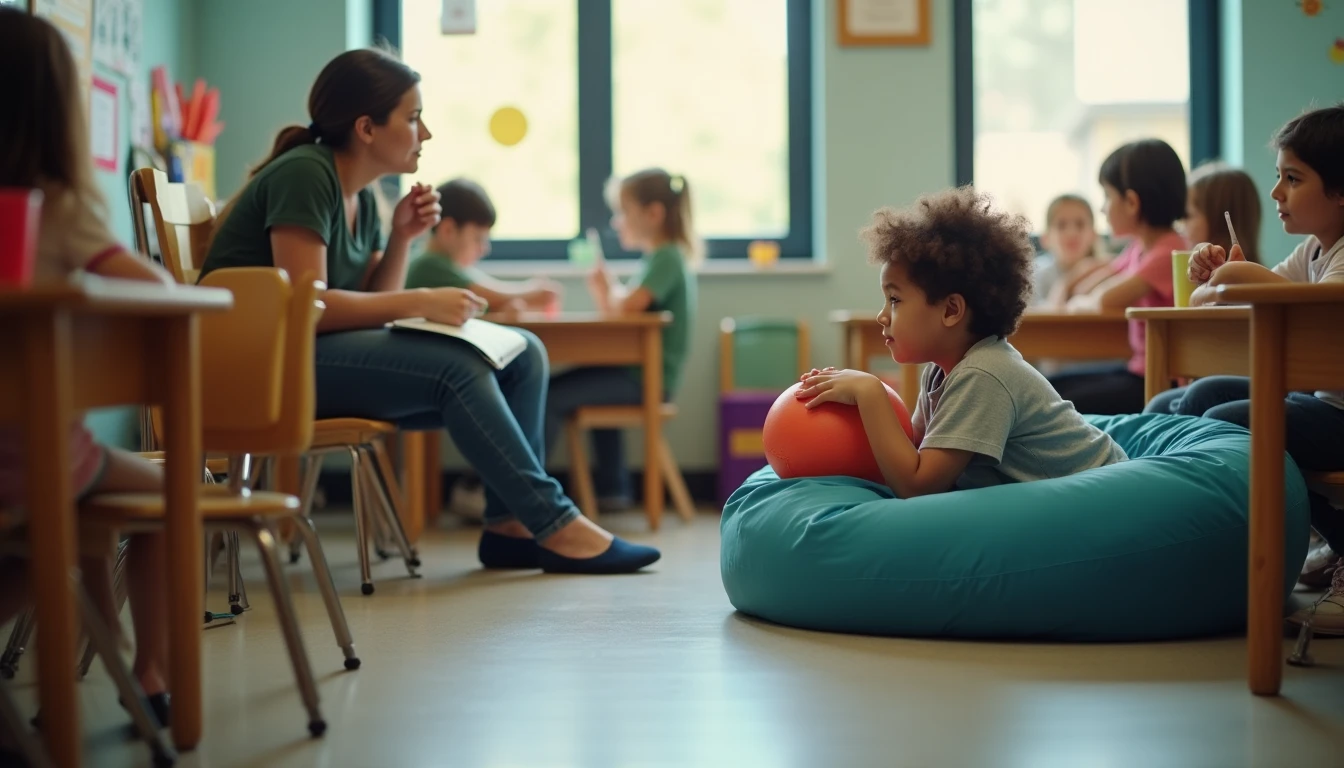
If you have heard a teacher say your child "needs a sensory break," you may wonder what that actually means. This article walks through clear sensory breaks examples. It explains why these short pauses matter and how they fit into a school day. It is written for parents of children in special education. It is also for anyone thinking about working as a paraeducator.
What Is a Sensory Break?
A sensory break is a short, planned pause from schoolwork. During that pause, a student does an activity that gives the body a certain kind of input. The goal is to help the student feel calm, alert, or settled enough to get back to learning.
To understand this, it helps to know a few terms.
- Sensory input is information your body takes in through the senses. That includes sight, sound, touch, taste, and smell. It also includes two senses people talk about less.
- Proprioceptive input comes from your muscles and joints. You feel it when you push, pull, lift, or squeeze. Many people find this kind of input calming.
- Vestibular input comes from movement and balance. You feel it when you rock, swing, spin, or bounce. It can wake the body up or settle it down, depending on the person.
- Regulation means being in a body state that fits the task. A regulated student is calm enough to listen but alert enough to work.
Some students take in sensory input differently than their classmates. A buzzing light might feel loud. A tag on a shirt might feel scratchy all day. Sitting still might feel almost impossible. A sensory break gives that student a way to reset.
Why Sensory Breaks Matter at School
A classroom asks a lot of a child's body. Students sit for long stretches. They hear many voices at once. They move through crowded halls. For most kids, this is manageable. For some, it builds up until they cannot focus.
When a student is not regulated, you may see it in their behavior. They might get up often, cover their ears, chew on a sleeve, or shut down. These are not signs of a "bad kid." They are often signs that the body needs something.
Sensory breaks matter because they can help a student:
- Return to learning with better focus
- Avoid a meltdown by resetting before stress peaks
- Learn about their own body and what helps them feel okay
- Stay in the classroom with their peers more of the day
This fits with frameworks many schools already use. Positive Behavioral Interventions and Supports (PBIS) is a schoolwide approach that focuses on preventing problem behavior instead of only reacting to it. The Pyramid Model is a similar framework for young children. It puts a strong focus on helping kids handle their emotions. Planned sensory breaks match both ideas. They support the student before things go wrong.
Sensory Breaks Examples by Type of Input
Sensory breaks look different for every student. Here are common examples, grouped by the kind of input they give.
Heavy Work (Proprioceptive) Examples
Heavy work means activities that use the large muscles against resistance. Many students find it calming.
- Pushing against a wall with both hands
- Carrying a stack of books to the library
- Wiping down tables or erasing a whiteboard
- Doing chair push-ups by lifting the body off the seat
- Squeezing a stress ball or a piece of putty
Movement (Vestibular) Examples
- Taking a short walk to deliver a note to the office
- Jumping in place or on a small trampoline
- Rocking in a rocking chair or on a therapy ball
- Doing a few stretches or simple yoga poses
- Using a swing during a scheduled break
Calming and Quiet Examples
- Sitting in a quiet corner with dim light
- Wearing noise-reducing headphones for a few minutes
- Using a weighted lap pad, when the student's team has approved it
- Looking at a calm-down jar or a picture book
- Doing slow breathing with a visual guide
Touch, Sound, and Oral Examples
- Playing with a fidget toy or textured object
- Listening to soft music through headphones
- Chewing on an approved chew tool
- Drinking water through a straw
Not every example fits every child. A walk might calm one student and overexcite another. That is why the choice of break belongs to the team, not to guesswork.
Keep Track of What Helps
OIBAI makes it simple to record how a student responds to each sensory break so you can bring clear notes to the teacher.
Who Decides Which Sensory Breaks a Student Gets?
This is an important point for parents and future paraeducators alike.
An occupational therapist (OT) is a school professional trained to look at how a student's body and senses affect daily tasks. An OT often helps choose which sensory activities a student uses. Some OTs build a sensory diet. That is a planned set of sensory activities spread across the day, much like meals.
The student's Individualized Education Program (IEP) may list sensory breaks as a support. An IEP is the legal plan that describes a student's special education services. Some students also have a behavior intervention plan (BIP). A BIP describes what to do to prevent and respond to certain behaviors. It may say when and how to offer a break.
The teacher and the case manager lead the plan. The case manager is the special education staff member who oversees a student's IEP.
How Sensory Breaks in the Classroom Fit the Paraeducator Role
A paraeducator is a school staff member who supports students under a teacher's direction. You may also hear the terms classroom aide or paraprofessional.
When it comes to sensory breaks in the classroom, a paraeducator's job is to support the plan that already exists. That means following what the IEP, the BIP, and the teacher say. It does not mean inventing new breaks or changing the schedule alone.
In practice, a paraeducator might:
- Know which breaks a student is allowed and when
- Offer the break the way the plan describes
- Keep the break calm, short, and predictable
- Notice how the student responds
- Share those notes with the teacher or case manager
That last part matters a lot. Paraeducators often spend the most time near a student. You may be the first to notice that a break is helping, or that it stopped working. The right move is to pass that information along so the team can decide what to do next.
This idea of watching, recording, and adjusting comes from applied behavior analysis (ABA). ABA is a field that studies how behavior connects to what happens before and after it. The IRIS Center and the National Center on Intensive Intervention both offer training on using data to guide support plans.
What Parents Can Ask About
If your child gets sensory breaks, you have every right to understand them. Questions you might bring to the teacher or case manager include:
- Which breaks does my child use, and how often?
- How does the team decide when a break is needed?
- Does my child ask for breaks, or does an adult offer them?
- How is the team tracking whether the breaks help?
- Is there something similar we could try at home?
For questions about your child's health or development, talk with your child's doctor or the school's related service providers. Those questions are outside what a teacher or paraeducator can answer.
A Common Worry: Are Breaks a Reward for Avoiding Work?
Some parents and new staff worry that breaks let kids skip hard tasks. It is a fair question. A well-planned sensory break is not an escape. It is a short tool to help the body get ready to learn. Teams often schedule breaks ahead of time, before stress builds. They also keep breaks brief and end with a clear return to work. When a team sees signs that a break has become a way to avoid tasks, they can adjust the plan.
Summary
A sensory break is a short, planned pause that gives a student the sensory input their body needs to stay regulated. Common examples include heavy work like wall pushes, movement like a short walk, and calming options like a quiet corner or headphones. Sensory breaks matter because they help students focus, stay in class, and avoid reaching a breaking point. The OT, teacher, and case manager decide which breaks fit, often through the IEP or BIP. A paraeducator supports that plan and shares what they observe. Parents can ask the team how breaks are chosen and tracked.



Comments
Sign in to comment and react. Comments appear after review.
No comments yet.