 OIBAI
6 Token Board Myths and What Actually Works Instead
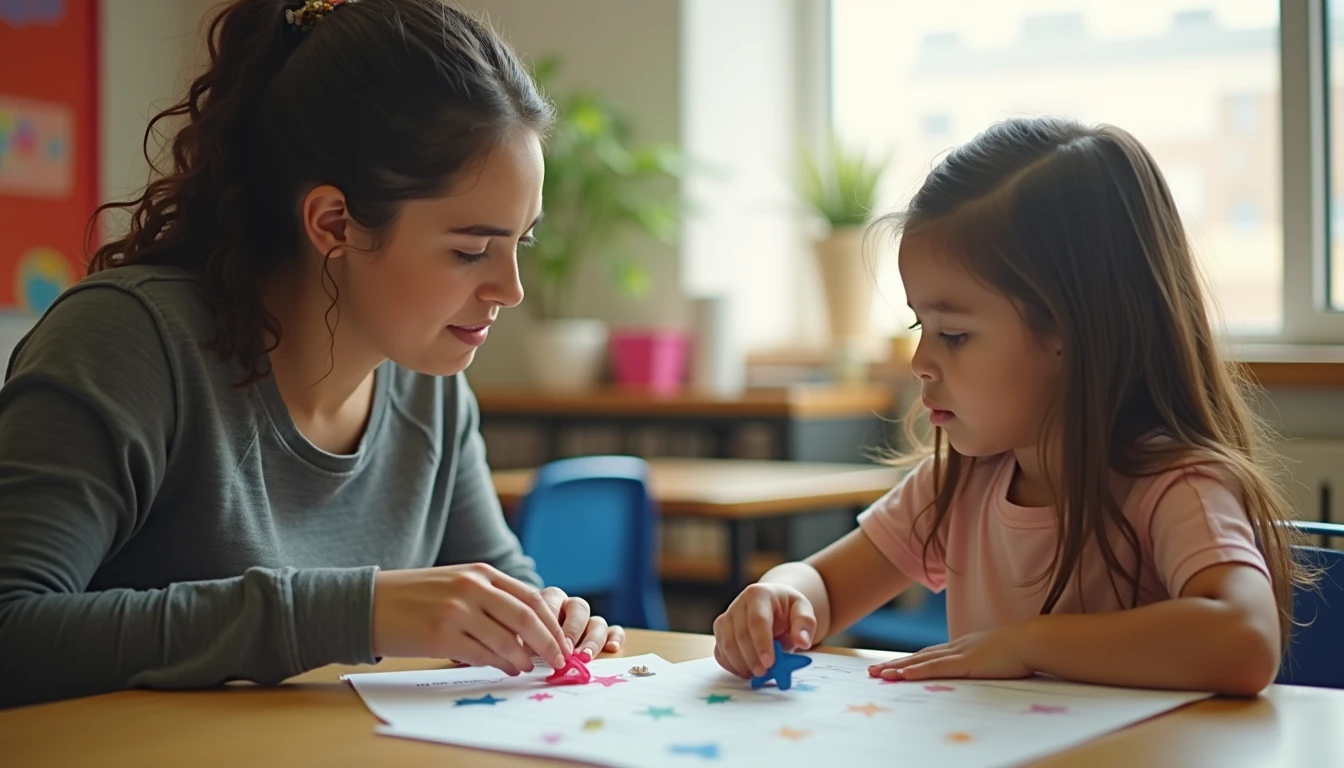
The first grader has written one letter of his name and put the pencil down. Recess ended four minutes ago, he's still flushed and sweaty, and the writing paper might as well be a brick wall. The paraeducator next to him slides a Velcro star onto a laminated strip with five empty squares and a picture of a trampoline at the end. "You started your name. That's one." He picks the pencil back up.
That strip is a token board, and when it's set up well it looks almost too simple to matter. When it's set up badly, it turns into a negotiation, a power struggle, or a piece of laminated clutter sliding around the corner of the desk. Most of the difference comes from a handful of beliefs that float around classrooms and staff rooms and don't hold up.
Here's the plain version, in case you're new to the role. A student earns tokens for a specific behavior, sees the board fill up, and gets something they want when it's full. That something is called a reinforcer, which just means anything that makes a behavior more likely to happen again. The teacher or case manager usually decides what goes on the board and what the student earns tokens for, especially when it's written into a behavior intervention plan. Your part is the one that makes or breaks it: handing out tokens, consistently, all day long.
Myth 1: "It's just bribery"
Fact: a token board is a planned agreement, and a bribe is a rescue.
A bribe gets offered after a problem has already started, to make it stop. "If you quit crying, you can have the iPad" teaches a student that crying is how you get the iPad. A token board works the other way around. The expectation is set before the work starts, the student knows exactly what earns a token, and the reward comes after the behavior you want, never as a way out of the behavior you don't.
Adults work for paychecks and nobody calls that bribery. The other piece people forget is that a good token system is built to shrink. Once a student is succeeding, the team stretches it from five tokens to eight, then to a few check-ins a day, then mostly to praise and natural rewards like finishing early. If you notice yourself offering the reward mid-meltdown to end it, that's the moment the board has quietly turned into a bribe.
Myth 2: "Ten tokens teaches more patience"
Fact: start short and fast, then stretch.
This is probably the most common setup mistake. A student who has never used a token board gets a ten-square board and has to work 40 minutes before anything happens. They lose track of what they're working for around minute eight, and the board becomes background noise.
At the start, most students do better with three to five tokens and a board they can fill in about five to ten minutes. On day one, give the first token almost immediately, sometimes for something as small as sitting down, so the student sees the system pay off. Pair every token with specific praise that names the behavior: "Hands on your paper. That's two." When the student is filling the board without much trouble for several days in a row, that's the signal to bring it to the teacher and talk about adding a token or stretching the time.
Patience gets built by increasing the wait slowly. It doesn't get built by starting with a wait the student can't handle.
Stuck on what a student will work for?
OIBAI can help you brainstorm reward options by age and interest, so you walk into your next check-in with the teacher ready with ideas.
Myth 3: "Taking tokens away teaches consequences"
Fact: for most students, earned tokens should stay earned.
Picture a third grader during the math block, about twenty minutes after lunch. He's got three stars, then shoves the tub of base-ten blocks into the kid next to him. The adult peels two stars off and says, "You just lost two for pushing." He rips the board off the desk, and now the math block is over for everyone at that table.
Removing tokens, which behavior analysts call response cost, is a real procedure, but it's one the team decides on and writes into the plan. It's not something to improvise on a hard afternoon. Pulling tokens tends to make the board feel like a trap, and students who feel trapped stop working for it. A steadier response handles the shove on its own terms, using whatever the plan says, and leaves the board alone: "Your stars stay. Let's pick up the blocks, and then you can earn the next one." The board keeps meaning one thing, which is that good work gets noticed.
Myth 4: "Any reward will do, as long as it's on the board"
Fact: the reward has to be something this student wants right now.
Preferences change, sometimes by the hour. The tablet that worked all last week might lose to bubbles today. Before you start the board, offer two or three picture choices and ask, "What are you working for?" Let the student pick and stick the picture on the end of the board themselves. That takes about fifteen seconds and does a lot of the motivating for you.
The class treasure box is overused for this. So are stickers, handed to students who couldn't care less about stickers. If a student fills the board and shrugs at the reward, the reward is the problem, and it's worth telling the teacher so the team can look at other options. Before food goes anywhere near a board, check with the teacher about allergies and what the family is comfortable with.
Myth 5: "Token boards are for little kids"
Fact: the format grows up, and the idea stays the same.
Older students refuse token boards mostly because the board looks babyish and everyone can see it. Change the look and you can often keep the system. A few token board examples by age:
- Preschool and kindergarten: three squares with a picture of a favorite character, tokens that are big and easy to grab
- Early elementary: a five-star strip with a small choice board attached
- Upper elementary: a punch card or a sticky note with tally marks
- Middle and high school: an index card of checkboxes tucked in a planner, or a simple tracker the student marks themselves
For an older student, the delivery matters as much as the card. A seventh grader in the middle of a science lab finishes labeling her diagram. The para walks past, makes a quiet check on the index card clipped to the edge of her folder, and says under her breath, "That's four. Two more and you've got ten minutes on the laptop." Nobody else at the table notices, which is the whole point. Privacy is what keeps a token system working past fourth grade.
Myth 6: "If it falls apart the first week, it doesn't work"
Fact: the first week is almost always messy, and that's expected.
It's the second week of kindergarten, during center rotations. A girl peels all the tokens off the strip, slaps them onto the empty squares, and announces, "I'm done! I get the playdough!" The adult keeps her voice flat and friendly: "Those go back on the strip. Show me one more block on your tower, and you'll earn the next one." Then she follows through, every single time.
The usual first-week problems are predictable:
- The student grabs tokens or fills the board themselves.
- The student demands the reward before the board is full.
- Adults forget to hand out tokens once the student is behaving, which is exactly when tokens matter most.
- Different adults run the board with different rules.
Most of these have simple fixes. Keep the loose tokens in your pocket or on your side of the desk, out of the student's reach. Use the exact same phrases as everyone else working with that student, and ask the teacher for a short script if there isn't one yet. Set a quiet reminder for yourself to deliver a token every few minutes during the first days, because adults drift.
Give the board one to two weeks of consistent use before anyone calls it a failure. Keep a quick note of how long each board took to fill and what the student chose. If it's still not working, that note is what helps the teacher figure out whether the board is too long, the reward is weak, or the target behavior isn't clear enough. Redesigning the system is their call, and your note makes the call a lot easier.
One small thing to try
Tomorrow, look at the token board you use most and time how long it takes the student to fill it. If it's well over ten minutes and the student is struggling, bring that number to the teacher along with what the student has been choosing. It's a five-minute conversation, and it fixes more boards than a brand-new laminated set ever will.




Comments
Sign in to comment and react. Comments appear after review.
No comments yet.