 OIBAI
What Is the Prompting Hierarchy Least to Most?
Ask someone new to special education what the gentlest kind of help is, and the answer is usually "just tell them." Talking feels light. It doesn't touch the student, it doesn't take over the task, and it seems like the least an adult could possibly do. It's also one of the hardest kinds of help to take away. Students learn to wait for the voice. Once that happens, the adult's words have quietly become part of the task, and getting them back out can take a whole semester.
That's a big part of what the prompting hierarchy least to most is designed to prevent. If you're thinking about working as a paraeducator, you'll probably hear a teacher say something like, "We're running a prompting hierarchy least to most for his morning routine, so give him a chance before you step in." It sounds like jargon. It's actually a very specific set of instructions about how much to help, when to help, and when to keep your hands in your pockets.
Prompts come in sizes
A prompt is any help an adult adds so a student does the right thing. It's extra. It sits on top of the natural cue, which is whatever in the environment should eventually tell the student what to do on its own: the bell, the empty lunch tray, the worksheet on the desk, the line forming at the door.
Prompts get sorted by how intrusive they are, meaning how much of the task the adult takes over. At the light end is a gestural prompt, like pointing at the hook where the backpack goes. Next are verbal prompts, which range from a vague hint ("What comes next?") to a direct instruction ("Hang up your backpack"). Visual prompts, like a picture schedule or a checklist taped to the desk, usually sit near the light end too, and they have a big advantage: they don't need an adult standing there. A model prompt means the adult shows the step. A partial physical prompt is a light touch at the elbow or wrist. A full physical prompt, sometimes called hand-over-hand, means the adult guides the movement completely.
Line those up from least to most help and you have a prompting hierarchy. Different schools order the middle levels a little differently, and that's fine. What matters is that everyone working with the same student uses the same order.
How least to most plays out in real time
In least-to-most prompting, the adult starts with no help at all. The student gets a chance to respond to the natural cue. If nothing happens within a set wait time, often somewhere around three to five seconds, the adult offers the lightest prompt on the list. Then waits again. Only if that doesn't work does the adult move up a level.
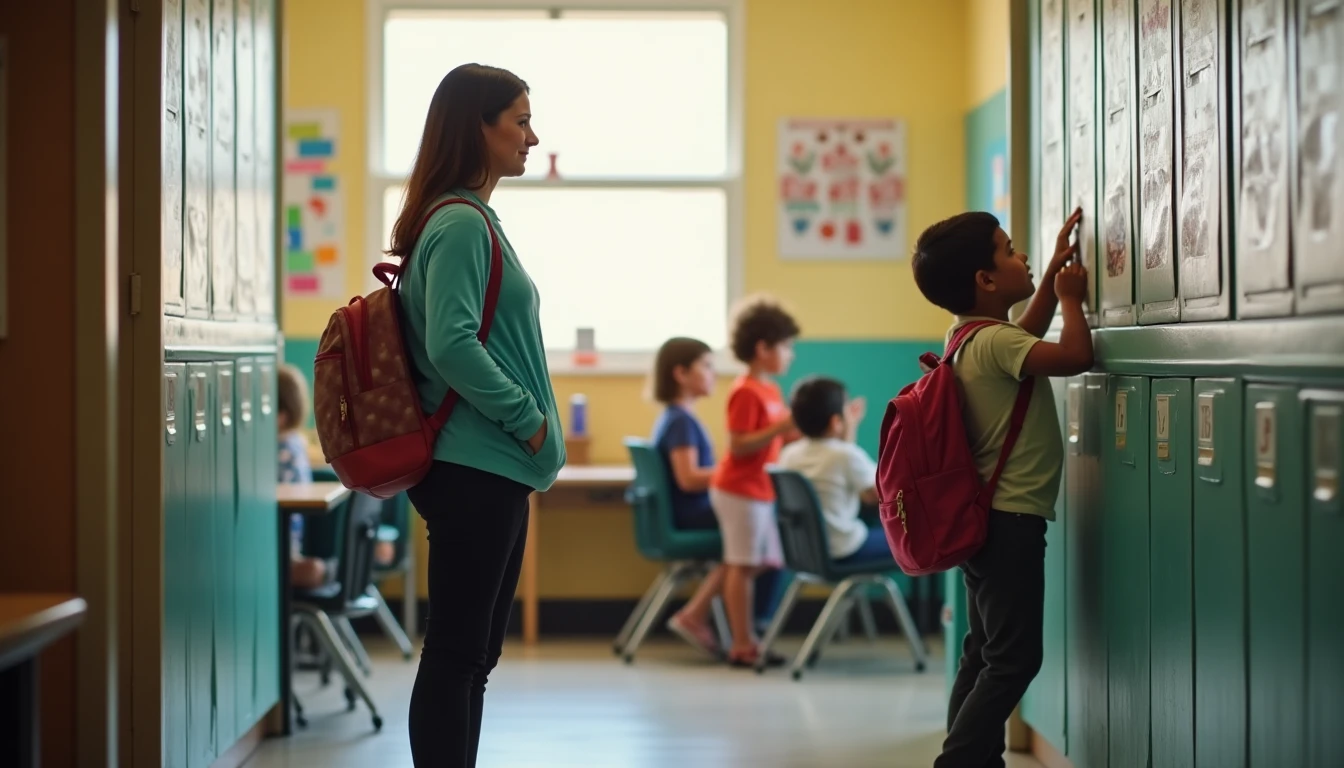
Picture a second grader in October, a few weeks after the morning routine was introduced. He comes in off the bus and stops at his cubby with his backpack still on, watching a classmate's new shoes. The aide stands nearby and says nothing for five long seconds. Nothing happens. She points at the hook. He shrugs the backpack off and hangs it up. She says, "Backpack's up," and that's it. On the data sheet, that step gets marked as gestural, not independent, and not verbal either, because she never told him what to do.
That's the whole idea. Each step gives the student the smallest amount of help that works, so he does as much of the thinking as possible. Over weeks, the goal is for the marks on that sheet to slide down toward independent.
Least to most isn't always the right choice
The opposite approach is most-to-least prompting. The adult starts with a lot of help, maybe a full physical prompt, and fades it as the student gets the hang of it. This is sometimes called errorless learning, because the student practices doing it right from the start instead of practicing mistakes.
Which one a student gets isn't the paraeducator's call. The teacher or case manager decides, sometimes with a behavior analyst, and it's written into the student's plan. Your job is to run it the way it's written. In general, least to most fits when a student already has some of the skill and needs room to show it. Most to least fits when a skill is brand new, or when getting it wrong has real consequences.
The difference is easy to see in a high school life skills class running a coffee cart in the spring. A ninth grader who has been counting change for months might be on least to most: the adult waits, then taps the register display if he stalls. That same student learning to pour hot water from the urn for the first time is likely on most to least, with an adult's hand on the handle alongside his, because a trial-and-error approach to boiling water isn't a lesson anyone wants.
Sort out prompt levels faster
When you're unsure whether that point and that hint counted as one prompt or two, OIBAI can help you work through it before you fill in the data sheet.
Where it goes sideways
The most common problem in the first week is impatience. Five seconds feels endless when a child is standing still and you're watching. New aides tend to jump in at one or two seconds, partly because waiting feels unkind and partly because the room is busy and the line is moving. But jumping in early teaches the student that if he waits, someone will do it for him.
The second problem is talking too much, and this one is overused across the whole field. Adults stack prompts without noticing. Take a seventh grader just back from a fire drill, staring at her math worksheet. An adult leans in and says, "Okay, you've got this, look at number one, remember we did these yesterday, start at the top, here, like this," and writes the first step for her. That's four verbal prompts and a model in one breath, and it'll probably get written down as one verbal prompt. A cleaner version is waiting, then saying only, "Check the example at the top," then waiting again.
That pile-up of words leads to prompt dependence, which is when a student can do a skill but won't start until an adult cues it. It's one of the most frustrating patterns in special education, because the student clearly knows how and still sits there.
The third problem is praise. If a student gets the same "Great job!" for an independent response as for a heavily prompted one, there's no reason to work toward independence. Most teachers will ask you to save your biggest reaction for the times the student did it without help. The prompted version gets a calm, quick acknowledgment.
What progress looks like
Progress here is slow and a little boring, which is a good sign. Week to week, the data should show prompts getting lighter: physical giving way to model, model to gestural, gestural to nothing. Plateaus are normal. A student might sit at gestural for three weeks, then suddenly do the routine alone on a Thursday for no reason anyone can name.
When a student gets stuck for a long time, the move isn't for the aide to quietly change the levels or the wait time. It's to bring the data sheet to the teacher and say what you're seeing: "He's been at a verbal prompt on step three for two weeks, and he seems to be looking at me before he starts." That's useful information. The teacher decides what changes. Free modules from places like the IRIS Center cover prompting in more depth if you want to read ahead before your first day.
If you're deciding whether this job fits you
This kind of work suits people who can tolerate a few seconds of silence and resist rescuing a child who's thinking. If that sounds hard, it's hard for almost everyone at first, and it gets easier with practice. A few questions worth asking in an interview:
- Which prompting approaches do your students' plans use, and how will I learn each student's levels?
- How do you want prompt levels recorded during the day?
- Who do I go to when a student seems stuck at one level?
The answers tell you a lot about how organized the classroom is and how much support you'll get.
The skill nobody mentions in the job posting is waiting. If you want a feel for it before you apply, try counting five seconds silently the next time a child near you is figuring something out, and notice how strong the urge is to say something. That urge is exactly what this method trains out of you, and the students are better off for it.

Comments
Sign in to comment and react. Comments appear after review.
No comments yet.