 OIBAI
What Do Behavior Intervention Plan Examples Actually Look Like?
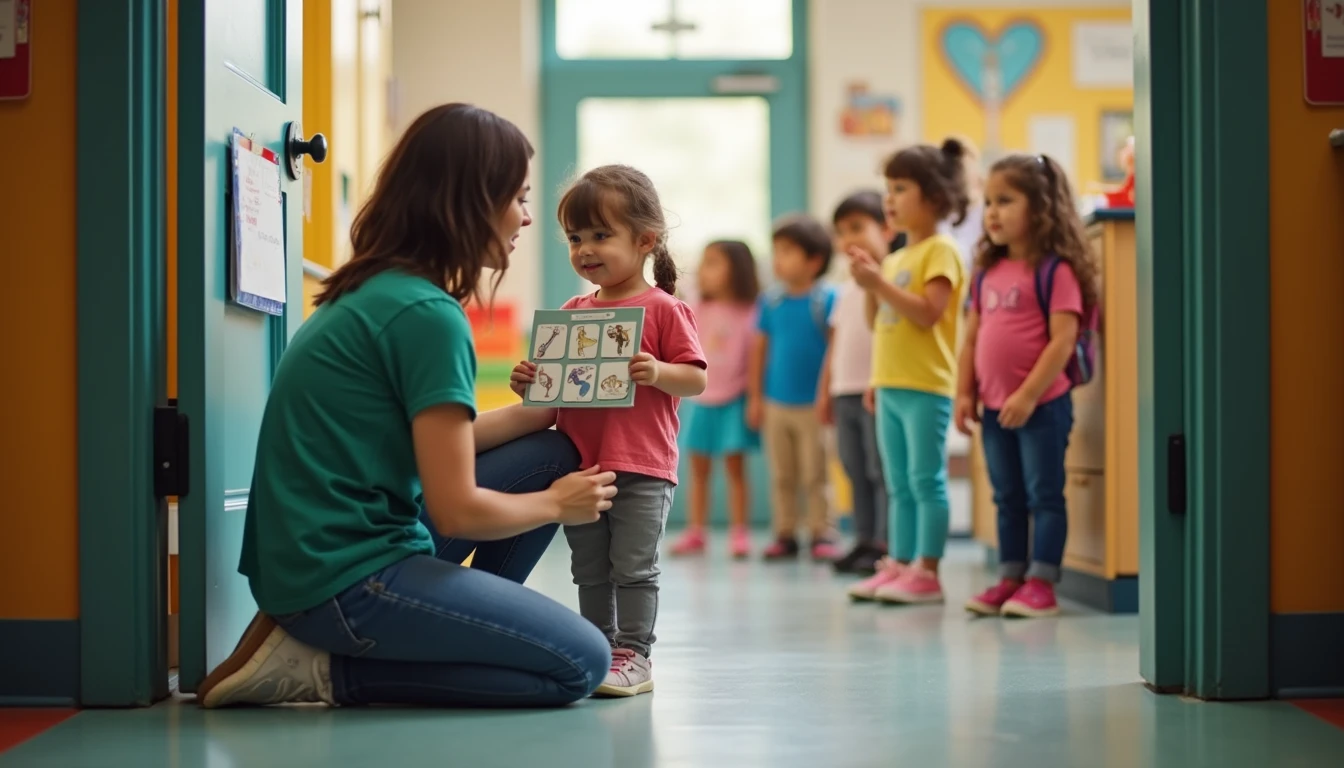
Plenty of parents walk into their first behavior meeting expecting a list of consequences: if your child throws a chair, here's the punishment; if he runs out of the room, here's the call home. That expectation makes sense, because that's how behavior gets handled in most homes and most of the schools we grew up in. It's also wrong about what a behavior intervention plan is supposed to be. A good plan spends most of its words on what happens before the behavior and on what your child will do instead. The consequences section is usually the shortest part, and when it's the longest, that's a warning sign.
It's smart to ask for behavior intervention plan examples before you sit down at that table, because seeing a few makes the real document far easier to read. So this article walks through what's inside one, what it looks like when it's working, and what it looks like when it's been written in a hurry.
What the document actually is
A behavior intervention plan, usually shortened to BIP, is a written plan that describes a specific problem behavior, the reason the team thinks it's happening, and what the adults will change so the behavior becomes less useful to your child. It's often attached to the IEP, and the teacher and case manager are the ones who write it and decide what goes in it, with input from you and sometimes a school psychologist or behavior specialist.
Most plans have the same parts, even when the headings differ from district to district:
- A description of the behavior, written so two adults would agree on whether it happened
- The function, meaning the team's best explanation of what the behavior gets your child or helps them avoid
- Prevention strategies, the changes adults make before trouble starts
- A replacement behavior, the acceptable action your child is taught to use instead
- How adults respond when the behavior happens anyway
- How progress will be measured
If any of those are missing, the plan isn't finished, no matter how official the formatting looks.
Every plan starts with a guess about why
Before a BIP gets written, the school usually does a functional behavior assessment, or FBA. That's a structured way of watching and recording when the behavior happens, what came right before it, and what came right after. The point is to figure out the function. Behavior at school tends to serve a handful of purposes: getting attention, escaping something hard or unpleasant, getting an item or activity, or meeting a sensory need.
This matters more than anything else in the plan, because the same behavior can serve completely different purposes for two kids. One child rips up a worksheet to get out of writing. Another rips it up because the adult across the room finally turns around. Send both of them to the hallway and you've just rewarded the first child and taught the second one that ripping paper works great. That's why copying a plan from the internet rarely helps much. The examples are useful for understanding the shape. The content has to come from your child.
One plan, start to finish
Picture a second grader during independent writing, about twenty minutes after lunch. The class has just been told to write three sentences about their weekend. He puts his head down, then slides his paper onto the floor, then starts kicking the leg of the desk. Data over two weeks shows this happens almost only during writing, and it ends when he's sent to the reading corner. The function is escape.
A solid plan for him would read something like this. Prevention: break writing into one sentence at a time, offer a sentence starter, let him dictate the first sentence to an adult. Replacement behavior: he uses a break card to ask for two minutes away, then comes back. Response when it happens anyway: the adult stays calm, keeps the task in front of him, and makes it smaller rather than removing it. In practice that sounds like the paraeducator kneeling beside him and saying, "Just the first word. I'll write the rest if you tell me."
Notice what isn't in there. No loss of recess, no clip chart. Those wouldn't touch the reason he's doing it.
Where tantrum plans usually go wrong
Most behavior intervention plan for tantrums examples you'll find online describe the tantrum in loving detail and then say "ignore and redirect." Planned ignoring has its place, but it's overused, and it only works when the tantrum is about attention. If the tantrum is about escaping a transition, ignoring it while the class leaves without your child means the tantrum just got him exactly what he wanted.
Here's a common one in kindergarten. It's October, recess just ended, and the class is lining up to go inside for math centers. A five-year-old drops to the blacktop, screams, and pulls off one shoe. The function, after a couple weeks of data, turns out to be the transition itself: leaving something fun for something unknown. Her plan includes a visual schedule she checks before recess ends, a two-minute warning, and a first-then card. The adult crouches nearby and says, "First shoes on, then you pick your center. I'll wait right here." Then she does wait, without adding more words, because a stream of talking tends to stretch a tantrum out.
That waiting can take three minutes or fifteen. The plan should say what happens if it goes long, who stays with her, and when the rest of the class moves on. A tantrum plan that doesn't answer those questions leaves adults improvising in the moment, which is exactly when consistency falls apart.
Consistency starts with the right words
When tantrum plans fall apart because adults improvise, OIBAI gives paraeducators ready-to-use phrasing that matches the plan the teacher wrote.
What it sounds like with older kids
In a typical seventh-grade math class, the plan looks quieter but the logic is identical. It's spring, the teacher has just started a review of fractions, and a student who's struggled all year announces loudly that this is stupid and starts a running commentary that gets the back row laughing. The FBA points to attention from peers, with some escape mixed in.
The plan here might give him a defined role, like passing out materials, so he gets legitimate attention early. It might seat him away from his audience. When the commentary starts, the adult walks over without looking annoyed and says, low enough that only he hears it, "You can take the pass to the water fountain or start on number four. Your call." No public back-and-forth, because public back-and-forth is the reward. Teenagers are very good at turning a correction into a show, and a decent plan takes the stage away.
Schools that use PBIS, a schoolwide framework for teaching and rewarding expected behavior, often build plans like this on top of their general classroom expectations. That's helpful, as long as the individual plan still names your child's specific function.
The first week usually looks worse
This is the part nobody warns parents about. When a plan stops rewarding a behavior, the behavior often gets bigger for a while before it fades. Behavior specialists call this an extinction burst. Your child has learned that screaming works, so when it suddenly doesn't, the natural move is to scream louder.
So if you hear in the first week or two that things are rougher, that isn't automatically proof the plan failed. It can mean the plan is hitting the right function. What should worry you is a plan that's been in place for six or eight weeks with no change in the data, or a plan that's being followed by one adult and ignored by everyone else. Inconsistency is the most common reason a reasonable plan doesn't work. If the morning para holds the line and the afternoon sub gives in, your child learns that the behavior works sometimes, and sometimes is plenty.
When a plan really isn't working, the fix usually isn't more consequences. It's going back to the function. Maybe the team guessed wrong, or the replacement behavior is harder for your child than the problem behavior was.
Where the paraeducator fits
The paraeducator is often the adult closest to your child for most of the day, so they're the one carrying out the plan minute to minute: offering the break card, using the exact phrasing, taking the data. They don't decide what the plan says or change it on their own. If something isn't working, a good para brings it to the teacher or case manager with notes, and the team decides. That's worth knowing, because if you want a change, the para is a great source of information, but the request goes through the teacher.
Questions worth bringing to the meeting
- What function did the FBA find, and what data supports it?
- What's the replacement behavior, and how will it be taught, not just expected?
- How will every adult who works with my child learn the plan?
- What does the data look like now, and when will we look at it again?
You don't need to know behavior analysis to ask those. You just need the team to be able to answer them clearly.
If you take one thing into your next meeting, make it this: ask the team to explain, in one sentence, why they think your child does the behavior. If they can't, the plan isn't ready yet, and it's completely fair to say so.




Comments
Sign in to comment and react. Comments appear after review.
No comments yet.